
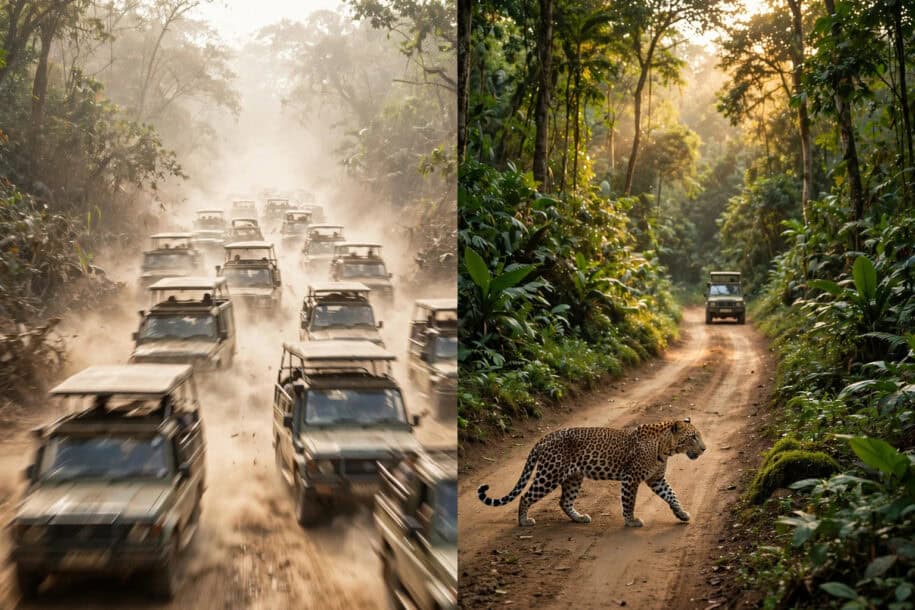
Planning a trip to the wild side of the island brings a specific kind of excitement. You picture the golden hour light hitting the jungle canopy. You imagine locking eyes with a wild leopard. A truly memorable Sri Lanka safari delivers exactly that raw thrill. Yet the way travelers experience these incredible landscapes has evolved dramatically over the last few years.
In fact, the island is currently undergoing a massive renaissance in wildlife tourism. Strict government interventions and passionate NGO campaigns throughout 2024 and 2025 completely reshaped the national park ecosystem. Today, the focus sits firmly on ethical, low-impact travel.
As a result, tourists now enjoy pristine environments, healthier animal populations, and a much deeper connection to nature. The days of chaotic jeep traffic are in the past. The future of wildlife exploration here is sustainable, serene, and spectacular.
A New Era for Wildlife
To understand the changes, you have to look at what happened on the ground. The Department of Wildlife Conservation introduced a series of bold regulations to protect the island’s biodiversity. These changes completely transformed the standard safari experience. The authorities implemented strict vehicle caps, mandatory mid-day park closures, and rigorous guide certification programs.
Because of this structured approach, the ecosystem finally gets room to breathe. Animals roam freely without the constant hum of diesel engines. Leopards hunt with natural ease. Elephants migrate through ancient corridors undisturbed.
Travelers benefit immensely from this shift too. The jungle feels wilder. The sightings feel more authentic. Every game drive becomes an intimate encounter with nature rather than a crowded spectator event.
The Yala National Park Shift
Naturally, the most famous destination for leopard spotting saw the biggest changes. Yala National Park remains the most popular spot. The sheer density of big cats in this region is unmatched anywhere else on the island. However, its massive popularity required immediate and decisive management.
First and foremost, the government capped the daily vehicle entry to a maximum of 300 jeeps. This single decision changed everything. On top of that, the digital e-ticketing system eliminated gate crowds and ensured a smooth entry process.
Furthermore, the park now closes for a mandatory two-hour rest period in the middle of the day. This brilliant policy mirrors the natural behavior of the wildlife. Big cats rest during the peak heat of the afternoon. Travelers now use this time to relax at their eco-lodges, returning to the park just as the animals wake up for their evening prowl.
Seasonal closures also play a huge role in this success story. Specific blocks of the park close during the dry months to allow waterholes to replenish and vegetation to recover. This rotational resting system guarantees that the habitat remains vibrant and healthy year-round.
Hidden Gems for Your Sri Lanka Safari
As the southern parks de-congested, a beautiful discovery unfolded for the global travel community. The island boasts an incredible array of alternative national parks. These hidden gems offer world-class wildlife viewing with a fraction of the foot traffic.
Here is a closer look at the top alternatives.
Wilpattu National Park is the largest national park on the island. It is famous for its unique natural sand-rimmed lakes. The dense jungle canopy here provides a thrilling, expedition-style atmosphere. Leopard sightings are frequent. The vast size of the park means you can easily spend hours exploring without seeing another vehicle. The sheer scale of the wilderness provides a profound sense of isolation and adventure.
Then there is Kumana National Park. Located on the southeastern coast, Kumana shares the same rich ecological system as its southern neighbors. Birdwatchers consider this area an absolute paradise. The mangrove swamps and lagoons attract thousands of migratory birds. The park also hosts a very healthy leopard population. The coastal breeze and the sound of the nearby ocean add a completely unique sensory layer to the game drives here.
Finally, Gal Oya National Park offers an experience entirely unique to the island. This is the only place where visitors can take a boat safari to watch wild elephants swimming between islands. The surrounding forests are home to the indigenous Veddha community. Specialized tour operators now offer guided jungle walks with local Veddha trackers. This adds a rich cultural and historical depth to the wildlife experience.
Booking a Conservation Sri Lanka Safari
Travelers today want their holidays to mean something. The rise of the conservation of Sri Lanka safari answers that exact desire. Luxury eco-lodges and specialized tour operators now channel a significant portion of booking fees directly into habitat protection.
This brilliant model funds anti-poaching patrols and clears invasive plant species from vital elephant corridors. Guests often get to meet the resident naturalists and rangers protecting these specific zones. Some high-end camps even invite visitors to participate in data collection or track monitoring alongside researchers.
At the end of the day, you leave the jungle knowing your visit actively secured its future. The vacation becomes a powerful force for good.
The Fight for the Jungle
Protecting wild spaces always sparks a debate. The transition to ethical tourism faced serious hurdles in 2024 and 2025. Local transport unions organized strikes when the government introduced the strict daily vehicle caps. The sudden drop in daily trips threatened the livelihoods of hundreds of independent drivers.
Fortunately, the solution came through education and premium pricing. Tour operators shifted focus to high-value experiences. This pivot ensured drivers earned a better living through quality rather than sheer volume. A single premium tour now pays more than three rushed, congested trips.
Political interference also tested the system. Powerful interest groups attempted to gazette illegal roads right through the buffer zones of Wilpattu and Yala. Environmental lawyers and passionate NGOs took the fight straight to the Court of Appeal.
Ultimately, the courts ruled in favor of the wildlife. They shut down the construction and set a massive legal precedent for environmental protection. These battles forged a much stronger conservation framework. The jungle won.
Essential Tips for Your Sri Lanka Safari
A flawless wildlife expedition requires smart planning. The digital e-ticketing system means gate sales are a thing of the past. Booking weeks in advance guarantees entry, especially during peak dry seasons.
Here are a few quick tips to keep in mind.
- Hire a Naturalist: A skilled tracker spots a leopard curled in a tree from a mile away. Always book a jeep with a certified naturalist rather than just a driver.
- Respect the Siesta: Parks close for two hours midday. Use this time to cool off at your lodge. The animals are sleeping anyway.
- Embrace the Silence: Loud noises ruin the experience and stress the animals. Keep voices low and let the sounds of the forest take over.
- Pack the Right Gear: Neutral-colored clothing blends into the environment. Bring a good pair of binoculars and a camera with a solid zoom lens.
Spreading the Safari Wealth
De-congesting the southern parks triggered a massive economic shift across the island. For decades, wildlife tourism dollars remained concentrated in a few southern towns. The push toward Wilpattu, Kumana, and Gal Oya changed the financial landscape for rural communities.
Villages in the North-Central and Eastern provinces now experience a booming eco-tourism economy. Local homestays, village councils, and community-run nature trails see direct financial benefits. A traveler booking a Sri Lanka safari in these lesser-known regions directly funds community-led conservation initiatives.
This decentralized model ensures that the financial rewards of wildlife protection reach the people living closest to the animals. When local communities profit directly from living elephants and leopards, human-wildlife conflict drops significantly.
Enforcing the Wild Rules
Passing regulations is only the first step. The real success of the 2026 wildlife model relies on strict, on-the-ground enforcement. The Department of Wildlife Conservation rolled out brilliant technical measures to keep rogue operators in check.
Every registered jeep now features a mandatory GPS tracking unit. Park rangers monitor vehicle movements in real-time from a central digital command center. If a driver deviates from the designated dirt trails to chase an animal, the system flags the violation instantly. The penalties for off-roading are severe, including immediate vehicle impounding and massive fines.
The role of the naturalist also evolved. Guides now act as compliance officers. They hold the authority to halt a jeep if the driver breaks speed limits or approaches an animal too closely. This technical and human enforcement combination guarantees a completely ethical Sri Lanka safari experience.
The High-Value Challenge
Every major shift brings a unique set of challenges. The transition to a low-impact, high-value tourism model creates a few hurdles for the modern traveler.
The strict 300-jeep daily cap means permits sell out weeks in advance. Spontaneous, last-minute wildlife trips are virtually impossible during peak seasons. Furthermore, the focus on premium, eco-friendly experiences naturally raises the baseline cost of a game drive. Budget backpackers might find the new pricing structure steep compared to the chaotic, high-volume days of the past.
This is exactly where expert travel planners step in. Securing those limited permits requires early coordination and deep industry relationships. Travelers partnering with established destination management companies bypass the booking stress entirely. They gain access to reserved permit blocks and exclusive eco-lodges that operate on private land borders, offering incredible wildlife sightings without needing to fight for a spot inside the main park gates.
Essential Sri Lanka Safari FAQ
Is Yala National Park closed in September 2026?
Blocks 1 and 2 close temporarily during September for dry-season ecological recovery. The other blocks and alternative parks remain completely open for game drives.
Which park offers the best leopard sightings in Sri Lanka?
Yala holds the highest density. Wilpattu and Kumana offer equally thrilling sightings with much fewer vehicles on the trails.
Can I buy safari tickets at the park gate in Sri Lanka?
Gate sales are discontinued. All visitors must secure permits through the official online reservation portal or via a registered tour operator.
Are mobile phones allowed on the safari jeep in Sri Lanka?
Phones are allowed, but ethical operators enforce strict silent modes. Playing music or making loud calls disturbs the wildlife and ruins the atmosphere.
What is the best time for a Sri Lanka safari?
The dry season from December to April offers the best wildlife viewing across most parks. Animals gather around shrinking waterholes, making them easy to spot. The eastern parks like Kumana peak slightly later, from May to September.
How much does a Sri Lanka safari cost in 2026?
Prices vary based on the vehicle type and guide expertise. A standard ethical jeep tour with a certified naturalist generally ranges from $45 to $75 per person for a half-day drive. Premium conservation safaris with luxury eco-lodges cost more but include direct conservation donations.
Are the Sri Lankan national parks safe for young children?
Absolutely. The new regulations mandate slower speeds and stricter route adherence, making the rides much smoother and safer for families. Just ensure kids understand the importance of staying seated and keeping voices low.
What should I pack for a Sri Lankan jungle game drive?
Bring neutral-colored clothing like olive green, brown, or khaki. Bright colors like red or white can startle the animals. A good pair of binoculars, a wide-brimmed hat, sunscreen, and a reusable water bottle are absolute essentials.