
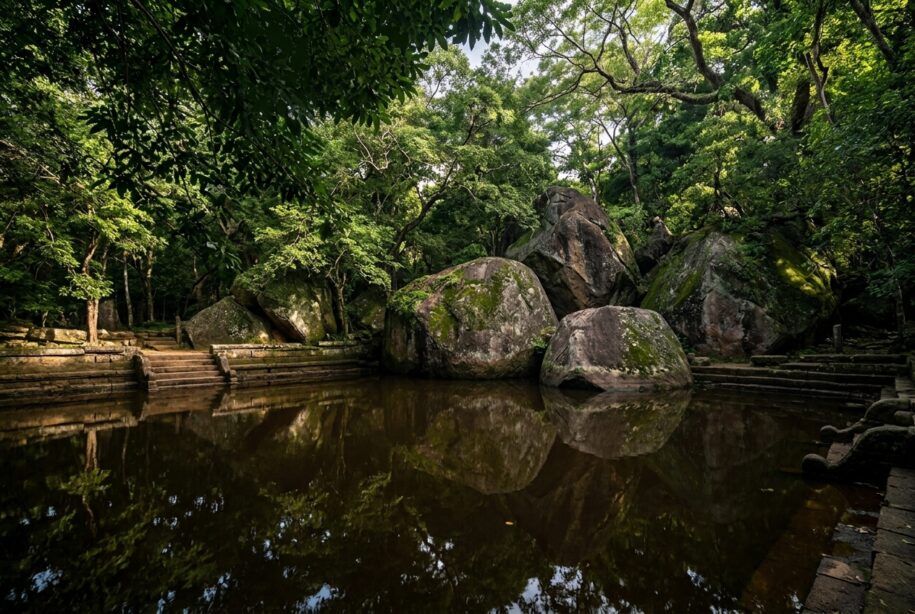
Visitors searching for Kaludiya Pokuna Dambulla will discover a peaceful archaeological forest near Kandalama Lake. This ancient reserve features rock-cut meditation caves, a dark reflective pool, and gentle jungle trails. The location is completely separate from the similarly named site in Mihintale. Travellers must specify the Kandalama coordinates when booking transport to avoid a long detour north.
Solving The Name Puzzle
Getting lost in Sri Lanka usually leads to a great story. Ending up at the wrong ancient ruin, however, wastes precious daylight. The phrase “Black Water Pond” translates directly to Kaludiya Pokuna. Ancient monks needed reliable water sources for their monasteries, resulting in multiple historical locations sharing the exact same name.
One famous pond sits on the western slopes of Mihintale near Anuradhapura. The actual target for Cultural Triangle visitors is Kaludiya Pokuna Kandalama. This specific archaeological forest lies just east of Dambulla.
Digital maps frequently default to the Anuradhapura coordinates. Drivers need clear verbal instructions. Specifying the Dakkinagiriya monastery or the Kandalama site ensures the vehicle heads south instead of north. Correcting the map coordinates sets the stage for a fascinating walk into history.
Carved Granite Caves
The jungle canopy opens up to reveal massive boulders scattered across the forest floor. These granite rocks hold the real magic of the Kaludiya Pokuna hike. Early Buddhist monks carved twelve distinct caves directly into the stone faces.
Monks used these shallow overhangs for deep meditation. The site functioned as a forest monastery dating back to the 2nd century BC. Ruins of an uposathaghara, a chapter house for monastic ceremonies, still stand among the trees.
Deeper in the reserve, the ruins of Dakkinagiriya Viharaya link back to King Sena II of Anuradhapura. Stone steps and ancient brick foundations peek through the dry zone foliage. Exploring the stonework naturally leads visitors down the path toward the famous water feature.
The Dark Water Pool
Heavy tannins from surrounding tree roots turn the pool into a mirror of dark glass. This striking feature gives the site its famous name. The still surface creates perfect reflections of the ancient rocks and hanging vines. Photographers love the moody lighting during the mid-morning hours.
Swimming is strictly prohibited. The pool serves as a protected ecological zone and an archaeological feature. Wading in disturbs the delicate micro-ecosystem and damages the ancient stone embankments. Knowing what to see is only half the battle; figuring out how to navigate the trail makes the experience truly enjoyable.
The Trail Walkthrough
The entrance path begins deceptively smooth. Visitors walk through scrub jungle and pass small local villages before the terrain shifts. The first five hundred meters offer a gentle stroll under the shade of Diya Labu and Pus Wal trees. This transitional zone between the wet and dry zones creates a lush green corridor. Birdwatchers often spot endemic dry-zone species flitting through the branches. Toque Macaques and giant squirrels also call this archaeological forest home.
The paved comfort ends exactly where the ancient history begins.
Physical Effort
Navigating the Kaludiya Pokuna hike requires moderate energy. Visitors will enjoy a pleasant nature walk through the canopy. The total distance is roughly one kilometre from the main gate to the central cave complex. Ancient stone steps carved directly into the bedrock make up the final ascent.
Proper footwear makes a massive difference here. Sturdy walking shoes with high-friction rubber soles grip the granite boulders perfectly. The rocks become incredibly slick after the inter-monsoon rains. Long socks and a strong DEET repellent keep leeches at bay during the wetter months of October and November. Pacing the walk over two hours allows plenty of time to explore the twelve caves without breaking a heavy sweat.
Mastering the trail leaves plenty of energy for the next crucial detail.
Tickets And Logistics
Accessing Kaludiya Pokuna Dambulla costs a fraction of the major Cultural Triangle attractions. The standard Kaludiya Pokuna ticket price ranges between 500 and 1000 LKR for foreign visitors. Paying the entrance fee at the small Department of Archaeology counter helps maintain the forest reserve. The gates open at sunrise and close promptly at sunset.
Arriving early in the morning guarantees the best experience. The 7:00 AM to 9:00 AM window avoids the harsh midday heat of the dry zone. Early hours also provide the best natural lighting for photographing the Black Water Pond Sri Lanka tourists love. Midday visits often result in exhausting humidity and washed-out photos. Planning the timing right transforms a good trip into a phenomenal memory.
Knowing when to go pairs perfectly with knowing how to arrive.
Transport Options
The site sits roughly thirteen kilometres south of Sigiriya and sixteen kilometres from the main Dambulla town centre. Independent travellers usually hire a tuk-tuk from their hotel. Drivers must receive explicit directions to the Kandalama location. Mentioning the Dakkinagiriya monastery prevents the driver from taking the long route to Mihintale.
Private vehicles offer more comfort for families or groups. The dirt road leading to the entrance accommodates most standard cars and vans. Parking space near the trailhead remains limited. Ample spots open up during morning hours. Guests booking through a professional inbound tour operator enjoy seamless transfers. A dedicated chauffeur handles the navigation, parking, and timing while the guide shares deep historical insights along the path.
Securing reliable transport sets the stage for comparing this hidden gem to its famous neighbours.
Comparing The Giants
Sigiriya offers epic royal history and a massive physical climb. Dambulla Cave Temple delivers grand painted architecture and heavy pilgrim traffic. Kaludiya Pokuna Kandalama provides something entirely different. This spot delivers pure serenity and raw archaeological exploration. Travellers seeking offbeat places near Sigiriya will appreciate the near-empty trails. The lack of heavy crowds allows visitors to actually hear the wind rustling through the canopy.
Choosing this location over the main attractions guarantees a highly personal experience. Families with young children or older travellers will find the gentle elevation much more forgiving. The relaxed pace turns a standard sightseeing day into a genuine jungle adventure.
Essential Day Tips
Packing light makes the Kaludiya Pokuna hike much more enjoyable. Bring a large reusable water bottle, as facilities inside the forest remain non-existent. A wide-brimmed hat and breathable cotton clothing protect against the intense dry zone sun. Neutral colours like olive green or khaki blend nicely with the surroundings and attract fewer biting insects.
Keep a small dry bag handy for sudden tropical showers. The weather in the Cultural Triangle shifts rapidly during the inter-monsoon months. Respect the site by leaving no trace behind. Carrying a small trash bag ensures the pristine environment stays beautiful for future explorers.
Kaludiya Pokuna FAQs
What is the Kaludiya Pokuna Mihintale difference?
The Mihintale location is a rock-carved bathhouse near Anuradhapura. The Dambulla location is a forest monastery with meditation caves near Kandalama Lake.
Are there leeches in the Kaludiya Pokuna forest?
Yes, especially after heavy rains in October and November. Tucking long pants into socks and applying a strong leech repellent solves this problem quickly.
Can visitors swim in the Black Water Pond in Sri Lanka?
Swimming is strictly prohibited. The dark water pool is a protected archaeological and ecological feature that requires careful preservation.
How long does the visit take?
Most visitors spend about two hours exploring the ruins, walking the trail, and photographing the dark water pool.
Plan Your Journey
Sri Lanka holds countless secrets waiting to be uncovered. The Dakkinagiriya monastery and the surrounding archaeological forest offer a perfect escape from the standard tourist trail. Locals often refer to this Kalupokuna site as a hidden gem for good reason. Navigating the local roads and finding the right trailhead becomes effortless with expert local guidance.
Partnering with a professional inbound tour operator removes the stress of logistics. Expert guides handle the transport while sharing deep historical insights along the path. Reach out today to start crafting a bespoke Cultural Triangle adventure that perfectly matches your travel style.