
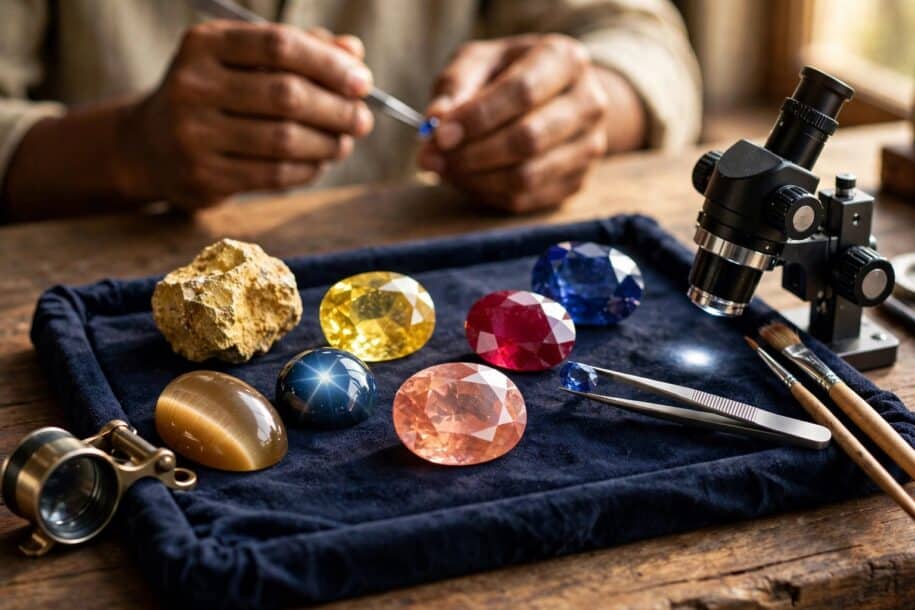
A handful of rough stones hits the glass counter with a soft clatter. The shopkeeper in Ratnapura spreads them out under a shaft of afternoon light, and now their subblime beauty in front of you makes you want to believe in their powers a little bit more. One stone catches the sun and throws a fleck of blue across your wrist. That’s the moment most visitors understand why Sri Lanka gems have pulled people to this island for over two thousand years.
This guide walks you through everything a traveler needs to know. Which stones are worth your money? Where to find them? How to tell a genuine piece from a synthetic imitation. Turning a simple shopping stop into one of the most memorable experiences of your trip requires a bit of knowledge and a good map. Let us start with the stories that put this island on the global map.
Ceylon Sapphires Fit for Royalty
The British royal family maintains a long, documented love affair with these specific stones. The most recognizable example sits on the hand of Catherine, Princess of Wales. Her 12-carat oval Ceylon blue sapphire engagement ring originally belonged to Princess Diana. Sourced directly from the island, the ring sparked a massive global demand for local sapphires the moment it debuted.
During a state visit to the island in October 1981, the Mayor of Colombo presented Queen Elizabeth II with another spectacular gift. The “Trumpet Brooch” is a vibrant floral spray set with an array of local precious stones. The late monarch chose to wear this specific piece on many public occasions, proving that the allure of local stones easily transcends generations.
Holding a certified stone in a modern showroom connects the buyer directly to this exact same royal lineage. The history here runs much deeper than crowns and brooches, though.
History of Sri Lanka Gems
Long before European monarchs started collecting jewelry, the island held a different title. Ancient Sanskrit texts referred to the land as Ratna-Dweepa, which translates directly to the Island of Gems. Global travelers took notice of this underground wealth very early. Marco Polo documented the extraordinary allure of the local rubies and sapphires during his ancient trade route journeys. The famous Moroccan scholar Ibn Battuta also recorded his amazement at the precious stones during his travels in the fourteenth century.
The earth itself engineered this specific treasure trove. Millions of years ago, the landmass of the island was joined to Madagascar as part of the massive Gondwana supercontinent. The two pieces of crust shared the exact same high-grade metamorphic rocks and intense tectonic pressures. When the continents finally broke apart and drifted across the Indian Ocean, they took those exact gem-bearing geological belts with them.
This shared prehistoric history explains why both regions produce highly similar corundum deposits today. The stones from the island maintain a distinct edge in global prestige due to their superior clarity and centuries of expert local cutting traditions.
That ancient geology cooked up a spectacular menu of minerals. Figuring out which ones to take home is the next great adventure.
Popular Gems in Sri Lanka
Walking into a gem dealer’s office means facing trays full of loose stones. Knowing exactly what you are looking at shifts the balance of the negotiation entirely. The island produces a wider variety of gemstones than almost any other landmass its size. These are the specific varieties worth your time and money.
Ceylon Blue Sapphire
This is the absolute headliner of the local trade. Ceylon blue sapphire stones are famous for a vivid, bright blue that leans toward a classic cornflower tone. Hold a high-quality piece to the light to see a brilliant internal sparkle. Darker sapphires from other regions often lack this specific liveliness and can look inky or blackish in low light. Always ask the dealer to bring the stone near a window. Showroom halogen lights can easily flatter a mediocre stone into looking extraordinary. Natural daylight tells the truth.
Padparadscha Sapphire
This rare variety displays a delicate blend of pink and orange. The specific hue mimics the color of a local lotus blossom at sunset. For centuries, the island was the only known source for these stones. Today, a few similar deposits turn up in Madagascar and Tanzania. A Padparadscha sapphire carrying a confirmed local origin certificate still commands the highest price per carat on the global market. Finding one in a shop is a rare event.
Star Sapphire
Cutting these stones into a smooth dome creates a visual effect called asterism. Tiny needle-like inclusions of rutile align inside the crystal during formation. Tilt the cabochon under a single light source and a distinct six-rayed star glides across the surface. The stones come in blue, purple, and black. The larger and sharper the star, the more valuable the piece.
Moonstone
The southern town of Meetiyagoda produces some of the finest blue-sheen moonstones in the world. A soft blue shimmer floats beneath the surface of a well-cut cabochon. Light scatters between microscopic layers of feldspar inside the stone to create this glowing effect. These pieces remain highly affordable compared to sapphires. They offer a beautiful entry point for travelers wanting to take home a genuine local stone without a four-figure budget.
Alexandrite
This chameleon stone shifts from green in daylight to a deep purplish-red under incandescent light. High-quality color change is incredibly rare. Expect to pay serious money for a clean alexandrite with a dramatic shift. Showing this stone to friends back home guarantees a strong reaction.
Ruby
Local rubies exist but are far less common than sapphires. The color tends toward a rich, slightly pinkish red rather than the deep pigeon-blood hue associated with Myanmar. They are beautiful and their relative scarcity makes them a fun find for serious collectors.
Identifying the right stone is only the first step. Finding the exact patch of earth where it was pulled from requires a road trip.
Where to Find Sri Lanka Gems
The geography of the island dictates exactly where you will find the best stones. A well-planned itinerary strings these locations together and turns a simple shopping trip into a comprehensive journey.
Ratnapura: The town name literally translates to City of Gems. Wooden scaffolding and water pumps line the local riverbanks where traditional pit mining takes place. Miners wash gravel in wooden sluice boxes, scanning the wet pebbles for a flash of color. The local market here is raw and fast-paced. You can watch rough stones change hands over cups of plain black tea. It is an incredible place to observe the very first step of the supply chain.
Elahera: This region sits further inland surrounded by dense forests and rocky outcrops. The area is famous for producing massive sapphire crystals. Some of the stones pulled from this soil weigh several kilos before a cutter even touches them. The landscape feels wilder and the mining operations are often larger in scale. A guided drive through the Elahera region gives you a sense of the sheer geological force required to push these crystals to the surface.
Meetiyagoda: This area requires a trip down to the southern coast near the beach towns. The mines here yield the famous moonstones from soft clay deposits. Walking through a moonstone mine feels entirely different from a sapphire pit. The earth is softer, the air smells like salt and wet clay, and the work is slightly less grueling.
Colombo: The capital city hosts the high-end retail showrooms. Walking into a polished Colombo shop after a dusty morning at the mining pits feels like stepping through a time machine. The air conditioning hums and the lights are calibrated to make every facet pop. This is where you find certified stones with international paperwork ready for custom settings. A good tour operator handles the logistics, driving you straight from the muddy river pits to the velvet display trays.
Mapping out these four distinct regions provides the perfect backdrop for a purchase. But before handing over any cash, a buyer needs to know how to separate a genuine stone from a clever imitation.
How to Spot a Real Ceylon Sapphire
Every traveler asks the same question at some point. How do I know this is real? The market is full of glass, synthetics, and heavily treated stones. Relying on a trusted seller is the golden rule. Understanding a few basic technical traits gives you a massive advantage.
Grab a 10x jeweler’s loupe. Reputable shops will hand you one gladly. Look deep inside the stone. Genuine Ceylon sapphires carry their history inside them. You will often see tiny, needle-like inclusions called silk. Small fingerprint patterns where liquid healed inside the crystal millions of years ago also prove natural formation. Lab-created stones look suspiciously perfect. They might contain tiny spherical gas bubbles or curved sweeping lines that never occur in nature.
Local sapphires bend light twice. This property is called double refraction. If you look through the top of the stone with a loupe and focus on the bottom facet edges, you will see a double line. Glass and spinel only show a single line. It takes a little practice to spot. The effort pays off at the counter.
Paperwork matters just as much as the stone itself. The National Gem and Jewellery Authority regulates the industry. When you shop for Sri Lanka gems, always ask for a certificate from a recognized gemological laboratory. A legitimate seller will provide a detailed report stating the exact weight, dimensions, color, and any heat treatment the stone has undergone. Heat treatment is a standard, accepted practice used to improve color and clarity. Full disclosure is the key. The certificate is your guarantee that the stone in your hand matches the description on the paper.
Buying Gems in Sri Lanka
Walking into a Colombo showroom after a dusty morning at the Ratnapura pits feels like stepping through a time machine. The air conditioning hums. The lights are calibrated to make every facet pop. A staff member in a crisp shirt slides a velvet tray across the glass and invites you to sit. This is the polished end of the trade.
A few names dominate the retail landscape. You will spot them on high streets, in hotel lobbies, and inside shopping malls. Vogue Jewellers has been cutting and setting stones since 1962 and recently took the top spot in national brand rankings. Sifani and Raja Jewellers are other established houses with decades of history behind them. These showrooms specialize in certified stones, custom settings, and international shipping. You can pick a loose Ceylon sapphire in the morning and return the next day to see it mounted in an 18-karat gold ring.
The buying etiquette shifts depending on where you are. In the open markets of Ratnapura, haggling is part of the dance. Sellers expect a conversation. A polite counteroffer is taken as a sign of serious interest. In the certified showrooms of Colombo, prices are generally fixed. The value there comes from the guarantee, the paperwork, and the after-sales service.
Always ask for a certificate from a recognized gemological laboratory. Keep every receipt and every lab report. You will need them at the airport. Gems can be exported via air freight or hand-carried under NGJA inspection. The process is straightforward when your paperwork is complete.
Record-Breaking Sri Lanka Sapphires
In 2021, a man in Ratnapura was digging a well in his backyard. His shovel hit something hard. What he pulled from the mud turned out to be a cluster of star sapphires weighing approximately 2.5 million carats. The formation is named the Serendipity Sapphire. Experts estimate its value between 72 and 100 million dollars. It remains one of the largest sapphire clusters ever recorded on the island.
The island has a long habit of producing giants. The Blue Giant of the Orient weighs 466 carats. It ranks among the largest faceted blue sapphires in existence. The Logan Sapphire is a flawless 423-carat stone cut from a Sri Lankan crystal. It now sits under glass at the Smithsonian Institution in Washington. A rare 3,563-carat purple star sapphire was unveiled in Ratnapura recently. Locals believe it is the largest of its kind anywhere in the world.
The historical trail stretches even further back. The Stuart Sapphire is a hundred-carat beauty that once sat at the front of the British Imperial State Crown. It came from these hills and now rests in the Tower of London alongside the other Crown Jewels. Every one of these stones started as a rough pebble in a riverbed or a clay pit. They waited for the right pair of eyes.
That is the real pull of this island. The next record-breaker could be sitting in a muddy sluice box right now.
Sri Lanka Gems FAQs
What is the best gem to buy in Sri Lanka?
The blue sapphire holds its value exceptionally well. The padparadscha offers a rarer color profile. Blue-sheen moonstone provides an affordable and beautiful entry point.
How much does a Ceylon sapphire cost?
Prices range from a few hundred dollars for a small included stone to tens of thousands for a vivid unheated piece over two carats. Certification and color saturation drive the final number.
Can tourists take Sri Lankan gems out of the country?
Yes. The export process via air freight or hand-carried luggage is smooth under authority inspection. Keep all purchase receipts and laboratory certificates handy for customs.
Is a certificate required when buying Sri Lankan stones?
A certificate from a recognized lab confirms the identity, weight, color, and treatment history of the stone. Reputable sellers provide this documentation as standard practice.
Are Sri Lankan stones preferred for astrology?
Local sapphires are highly preferred in Vedic astrology due to their superior clarity and lack of negative inclusions.
Plan Your Sri Lanka Gem Tour
A stone means significantly more when the buyer knows the exact mine it came from. Standing at the edge of a Ratnapura pit and watching the gravel wash through a wooden sluice adds profound context to a showroom purchase in Colombo.
The team at JourneyScapes builds private gem tours around specific travel dates. Transport, mine visits, cutter workshops, and certified showroom appointments are all handled seamlessly. Book a dedicated itinerary for an unforgettable journey through the island’s most sparkling heritage.